If you live in Roselle, NJ, you already know the drill: tree pollen blankets everything every spring, ragweed takes over every fall, and the humidity in between makes homes feel stuffy and dust-heavy year-round. Add in Union County’s proximity to major highways and the Newark industrial corridor, and it’s no surprise so many local homeowners are searching for the best HEPA air purifiers for home use.
The good news is that a properly sized HEPA air purifier is one of the most effective, affordable steps you can take to cut down on allergens, dust, and airborne irritants indoors. This guide covers what actually makes a HEPA air purifier worth buying, our top picks for different rooms and needs, and how to know if you need something bigger than a single portable unit.
What Makes a HEPA Air Purifier “True HEPA”?
Not all filters labeled “HEPA-type” or “HEPA-like” perform the same. A true HEPA filter is independently certified to capture 99.97% of airborne particles as small as 0.3 microns — the size range that includes pollen, pet dander, dust mite debris, mold spores, and even many smoke particles. Look specifically for the words “True HEPA” or an “H13” filter grade on the spec sheet. Marketing terms like “HEPA-style” or “HEPA-like” usually mean a lower-grade filter that won’t perform nearly as well.
A quality HEPA filtration system typically layers a few stages together:
- Pre-filter — catches large particles like hair and lint, extending the life of the main filter
- True HEPA filter — captures fine particulates down to 0.3 microns
- Activated carbon filter — absorbs odors, smoke, and some VOCs (HEPA filters alone don’t remove gases or smells)
Why Roselle, NJ Homeowners Need Good HEPA Filtration
A few local factors make indoor air quality solutions especially worthwhile here:
- Heavy seasonal pollen — Northern New Jersey sees strong tree pollen in spring and ragweed pollen in fall, both of which infiltrate homes every time a door or window opens.
- Humidity and mold risk — Summers in the area run humid, which supports mold growth in basements, bathrooms, and poorly ventilated rooms.
- Highway and industrial proximity — Homes near the Turnpike corridor, Route 1&9, or Newark’s industrial areas deal with higher outdoor fine particulate (PM2.5) levels, which work their way indoors.
- Older housing stock — Many Roselle homes have aging HVAC ductwork, which can let unfiltered outdoor air bypass central filtration.
A well-chosen HEPA air purifier — either portable or paired with your HVAC system — directly addresses all four of these issues.
What to Look for in a HEPA Air Purifier
Before comparing specific models, match the purifier to your room and needs using these criteria:
- True HEPA (H13) filtration — non-negotiable if allergies are your main concern.
- CADR matched to your room size — multiply your room’s square footage by two-thirds to get the minimum CADR (Clean Air Delivery Rate) needed for roughly five air changes per hour, the level most allergists recommend.
- Noise level across all speeds — a unit that’s quiet on low but only effective on high (and too loud to run overnight) won’t actually get used consistently.
- Activated carbon layer — important if odors, smoke, or VOCs are a concern alongside allergens.
- Certifications — look for Energy Star, AHAM Verifide, or Asthma & Allergy Friendly certification for extra assurance of real-world performance.
- Filter cost and replacement schedule — factor in the ongoing cost, typically every 6–12 months for HEPA filters.
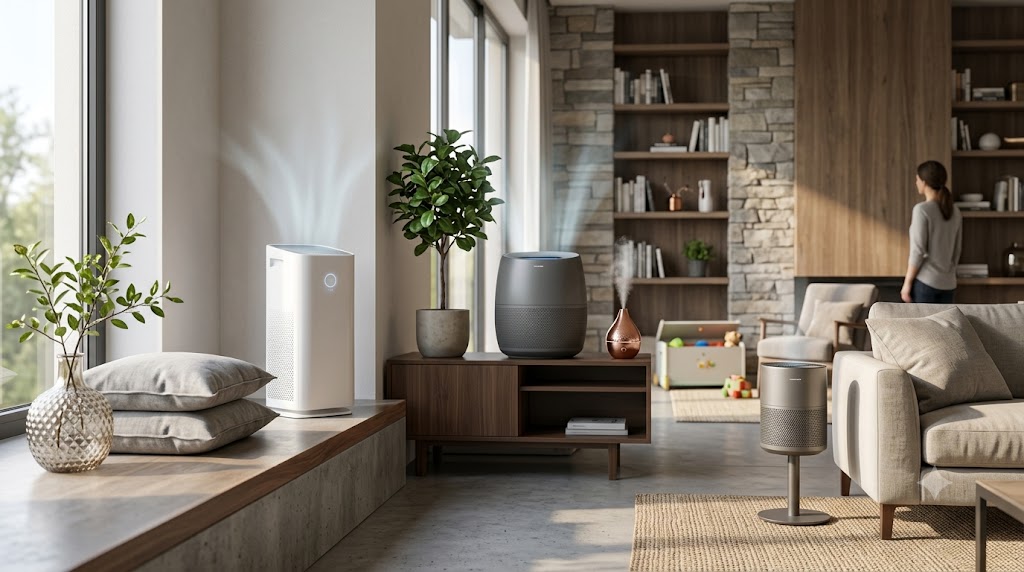
Best HEPA Air Purifiers for Home Use in 2026
HEPA Portable Purifiers vs. Whole-Home HVAC Filtration
A HEPA portable air purifier is excellent for targeting a specific room — a bedroom, nursery, or home office. But if allergy symptoms, dust, or odors are a problem throughout your entire Roselle home, it may be worth pairing a portable unit with an upgraded whole-house HVAC air purification system, so every room benefits from continuous filtration, not just the one room with the portable unit running. We cover that comparison in detail in our guide to [whole-house vs. portable air purifiers].
How Precise Air Systems Can Help Roselle, NJ Homeowners
Choosing the right HEPA air purifier — or deciding whether your home actually needs whole-house HVAC filtration instead — depends on your home’s size, layout, and what’s driving your air quality concerns. Precise Air Systems serves Roselle and the surrounding Union County area, and can assess your current HVAC setup, test your indoor air quality, and recommend the right combination of filtration for your household. [Schedule your indoor air quality assessment today.]
Frequently Asked Questions
What is a true HEPA filter?
A true HEPA filter is independently certified to capture at least 99.97% of airborne particles measuring 0.3 microns or larger, including pollen, dust, pet dander, and mold spores. Look for “True HEPA” or “H13” on the label — terms like “HEPA-type” indicate a lower-performing filter.
Do HEPA air purifiers actually help with allergies?
Yes. HEPA air purifiers are one of the most effective tools for reducing airborne allergy triggers like pollen, dust mite debris, and pet dander, especially when sized correctly for the room and run continuously.
How often do I need to replace a HEPA filter?
Most true HEPA filters need replacement every 6 to 12 months, depending on usage, household pets, and local air quality. Activated carbon filters may need replacing more often if odor control is a priority.
Can a portable HEPA air purifier replace whole-house HVAC filtration?
Not entirely. A portable unit only treats the room it’s in, while HVAC-integrated filtration treats air throughout your entire home. Many households use both together for the best results.
What size HEPA purifier do I need for my room?
Multiply your room’s square footage by two-thirds to find the minimum CADR you need. For example, a 300 sq. ft. bedroom needs a CADR of at least 200 to properly clean the air about five times per hour.