By Marketing Team, Precise Air Systems Inc.
Good indoor air quality protects health and improves comfort. Poor air can trigger respiratory problems and allergies. This article summarizes practical solutions—whole home purification and humidity control—explains how they work, and gives clear recommendations for Roselle homeowners seeking healthier living spaces.
What Are the Benefits of Whole Home Air Purification Systems in Roselle?
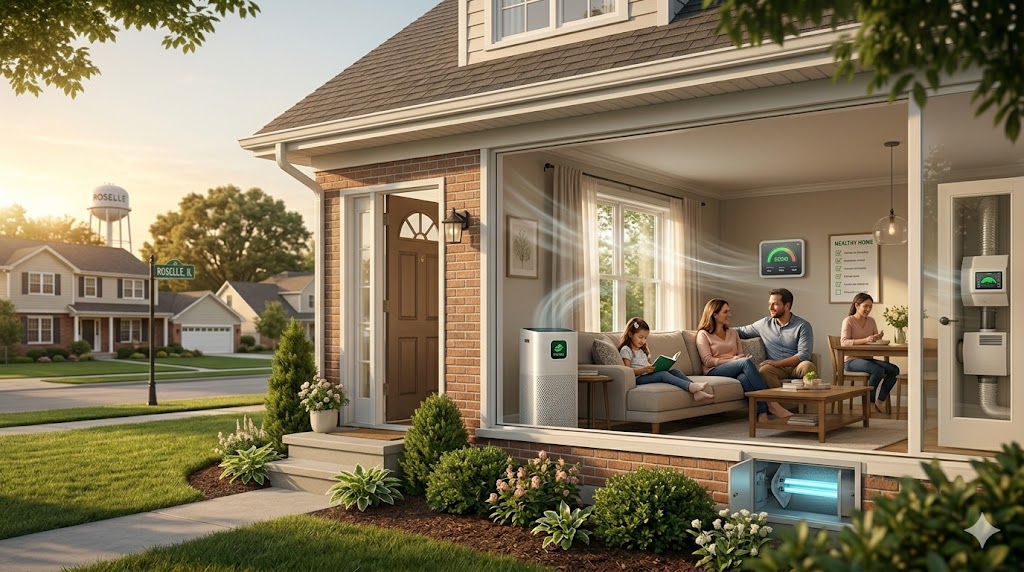
Whole home air purification systems clean air throughout the house, removing common contaminants and delivering consistent air quality across living spaces. Key advantages include:
- Health Improvements: Reduce allergens, airborne pathogens, and pollutants to support respiratory health.
- Energy Efficiency: Many systems are designed to be energy-efficient, helping control operating costs.
- Low Maintenance: Most systems need periodic filter changes and occasional checks, keeping upkeep simple for homeowners.
For many Roselle households, a whole home system is a practical investment. For options and local service, see the indoor air quality services available.
How Do Whole Home Air Purifiers Improve Indoor Air Quality?
Whole home purifiers filter and circulate air through the HVAC system. Technologies such as HEPA, activated carbon, and UV light capture particles and neutralise contaminants as air moves through the system, reducing dust, dander, and airborne risks.
Which Energy-Efficient Purification Systems Are Recommended for Roselle Homes?
Prioritise energy-efficient systems that balance performance and operating cost. Common choices include:
- HEPA Filtration Systems: Trap the vast majority of particles and are effective against allergens.
- Activated Carbon Filters: Target odors and VOCs while remaining economical to run.
- Ultraviolet (UV) Light Purifiers: Reduce biological contaminants with low energy use.
Any of these options can significantly improve indoor air quality in Roselle homes when selected to match household needs.
How Do HVAC Air Filtration Solutions Enhance Residential Air Quality?
HVAC filtration removes contaminants before air is distributed through the home, playing a central role in sustained indoor air quality.
Filtration technologies include:
- Pleated Filters: Capture larger particles and are simple to replace.
- HEPA Filters: Capture very small particles for healthier air.
- Electrostatic Filters: Use static charge to attract particles; many are reusable.
Choose filters based on your household’s needs and maintain them regularly to keep systems efficient and air clean.
What Types of HVAC Filters Are Best for Roselle Homes?
Options include HEPA for maximum particle removal, standard filters for general use, and electrostatic filters for reusable, lower-waste operation.
- HEPA Filters: Best for capturing tiny allergens and pollutants.
- Standard Filters: Adequate for homes with light air quality concerns.
- Electrostatic Filters: Reusable and cost-effective for environmentally minded households.
Choosing the right filter affects daily indoor air quality and system performance.
How Often Should HVAC Filters Be Replaced or Maintained?
Regular filter replacement sustains performance and air quality. General guidelines:
- Every 1–3 months for standard filters, depending on usage.
- Every 6–12 months for HEPA filters.
- Semi-annual checks for electrostatic filters, which can be cleaned and reused.
Set a maintenance schedule to keep your filtration system operating effectively and extend its service life.
Why Is Humidity Control Essential for Comfortable and Healthy Homes in Roselle?
Controlling humidity supports comfort and indoor air quality. Keeping humidity between 30–50% helps prevent mold and dust mite growth and can aid heating efficiency in cooler months.
What Are Common Humidity Control Methods for Indoor Air Quality?
Common methods to manage indoor humidity include:
- Dehumidifiers: Reduce excess moisture in basements and damp areas.
- Humidifiers: Add moisture in dry winter months to improve comfort.
- Ventilation Systems: Replace stale indoor air with fresh outdoor air to help regulate humidity.
Using these approaches where needed improves comfort and reduces health risks from improper humidity.
How Does Proper Humidity Regulation Improve Home Comfort and Air Quality?
Balanced humidity reduces mold and dust, leading to cleaner air and a healthier home. It also eases HVAC workload, improving energy efficiency and lowering operating costs.
Maintaining correct humidity supports better health and lasting comfort for the whole family.
How Can Homeowners Schedule Expert Indoor Air Quality Services in Roselle?
Scheduling professional indoor air quality services is straightforward and helps identify and address issues efficiently.
- Contact Local Experts: Reach specialists in air filtration and purification for tailored advice.
- Consultation: Initial assessments identify specific air quality issues and suitable solutions.
- Maintenance Plans: Regular plans help sustain improvement over time.
For expert assistance, residents in Roselle can reach Precise Air Systems by calling (973) 964-7070 or emailing preciseairpros7070@gmail.com. Located at 541 E 2nd Ave, Roselle, NJ 07203, they offer comprehensive services. Visit their website for more information on air quality solutions.
Frequently Asked Questions
1. How do I know if I need a whole home air purification system?
If you regularly have allergy symptoms, respiratory issues, excess dust, musty odors, high humidity, or visible mold, consider a professional indoor air quality assessment for tailored recommendations.
2. Can whole home air purifiers work alongside existing HVAC systems?
Yes. Whole home purifiers integrate with HVAC systems to filter contaminants before air circulates, improving whole-house air quality without separate portable units.
3. How is humidity measured in my home?
Use a hygrometer to get accurate indoor moisture readings. Keep levels near the recommended 30–50% range and adjust systems as needed.
4. Are there specific maintenance tips for air purification systems?
Routine maintenance preserves performance: replace filters on schedule (1–3 months for standard, 6–12 months for HEPA), clean components, and inspect ductwork for blockages.
5. What are the signs of poor indoor air quality?
Signs include persistent odors, worsening allergy or asthma symptoms, visible dust buildup, excessive humidity, and mold. Regular checks and targeted measures help address these problems.
6. Is professional installation necessary for air purification systems?
Professional installation is recommended to ensure correct sizing, placement, and calibration with your HVAC system for reliable, long-term performance.
7. How can I maintain comfortable humidity levels without a professional service?
Manage humidity with household humidifiers and dehumidifiers, use ventilation and exhaust fans, and monitor levels with a hygrometer to adjust systems yourself.
Conclusion
Improving indoor air quality is important for Roselle residents. Whole home purification systems reduce allergens and pollutants while operating efficiently. Evaluate options and consult local experts to find solutions that match your needs and help maintain a healthier home.